How Minimum Wage in Latvia Will Change Starting in 2026
The minimum wage is one of the key indicators that affects both employees and employers. In Latvia, another increase of minimum wage is planned for 2026. These changes matter for everyone – they reflect the country’s economic policy, the level of social protection, and they also influence businesses and household budgets. In this article, we explain in detail what is currently known about the upcoming rise in Latvia’s minimum wage.
What Will the Minimum Wage Be in Latvia in 2026?
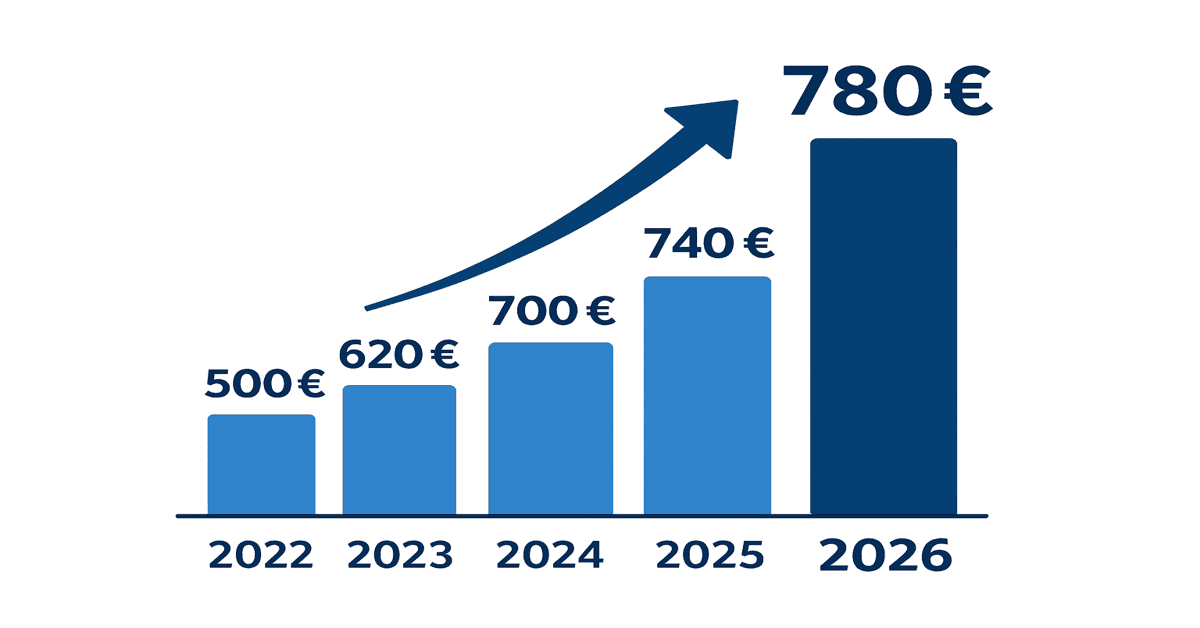
Starting 1 January 2026, the minimum monthly wage in Latvia will be €780, which is €40 higher than the previous threshold of €740 introduced at the start of 2025. This increase follows the new calculation method, where the minimum wage is linked to the national average salary – roughly 45–50% of its level.
At the same time, the non-taxable minimum is set to rise from €510 to €550 starting in 2026.
How the Increase Will Affect Employees
For employees, a higher minimum wage brings several direct benefits:
- Higher income. Workers earning the minimum wage will see their pay rise. Even after taxes and social contributions, take-home pay will be higher, improving purchasing power and overall living standards.
- Better motivation and lower turnover. Higher pay makes jobs more attractive. This can help reduce staff turnover, especially in industries with many minimum-wage positions.
- A sign of state support. Increasing the minimum wage signals government attention to low-income groups, helping reduce inequality and support a more balanced standard of living.
However, it’s important to keep in mind that minimum wage increases are sometimes accompanied by rising prices for goods and services. This can partially offset the positive impact for workers.
How the Increase Will Affect Employers
For employers, the minimum wage increase brings several significant challenges. Most importantly, labour costs will rise – a particularly sensitive issue for businesses with many low-paid employees. A higher minimum wage also means higher social contributions and taxes, and often requires updating employment contracts and internal pay systems. Budget planning becomes more complex as well. Companies must find a balance between rising expenses, maintaining profitability, and retaining employees. In some industries, this may also lead to price adjustments for products or services to compensate for higher operational costs.
Future Minimum Wage Growth: Government Plans for 2027–2028
The Latvian government plans to continue gradually increasing the minimum wage over the next few years, moving toward a more predictable and economically grounded model. After the planned increase to €780 in 2026, the next steps are €820 in 2027 and €860 in 2028. These figures follow the new methodology, which ties the minimum wage to a fixed share of the national average. This helps ensure a more stable labour market and allows worker incomes to adjust more smoothly to economic changes.
Historical Trends in Latvia’s Minimum Wage
Below is a year-by-year overview of Latvia’s minimum wage:
| Year | Minimum Wage |
| 1998 | 42,00 LVL |
| 1999 – 2001 | 50,00 LVL |
| 2001 – 2002 | 60,00 LVL |
| 2003 | 70,00 LVL |
| 2004 – 2005 | 80,00 LVL |
| 2006 | 90,00 LVL |
| 2007 | 120,00 LVL |
| 2008 | 160,00 LVL |
| 2009 – 2010 | 180,00 LVL |
| 2011 – 2013 | 200,00 LVL |
| 2014 | 320,00 € |
| 2015 | 360,00 € |
| 2016 | 370,00 € |
| 2017 | 380,00 € |
| 2018 – 2020 | 430,00 € |
| 2021 – 2022 | 500,00 € |
| 2023 | 620,00 € |
| 2024 | 700,00 € |
| 2025 | 740,00 € |